
Cervical Disc Prolapse Treatment
Understanding Cervical Disc Prolapse Treatment
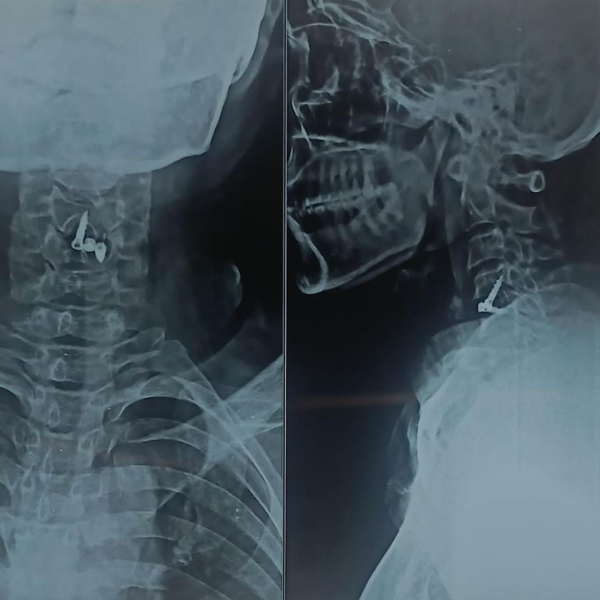
Cervical Disc Prolapse occurs when the inner gel of a neck intervertebral disc leaks through a crack in the outer ring, compressing the cervical spinal cord or exiting cervical nerve roots (most commonly at C5-C6 or C6-C7). This leads to debilitating neck pain, shoulder ache, and radiating arm pain (cervical radiculopathy). Left untreated in cases of central herniation, it can progress to cervical myelopathy with spinal cord damage. Dr. Nitish Agrawal offers both anterior cervical discectomy and fusion (ACDF) and motion-preserving artificial cervical disc replacement.
Common Signs & Symptoms
- Dull or sharp pain in the neck radiating into the shoulder blade, arm, forearm, or fingers
- Numbness, tingling, or loss of sensation in the arm or specific fingers
- Weakness in shoulder abduction, elbow flexion/extension, or hand grip
- Pain exacerbated by rotating or extending the neck (Spurling’s sign)
Primary Causes & Risk Factors
- Cervical disc degeneration from age, repetitive neck strain, or prolonged forward head posture ("tech neck")
- Sudden neck whiplash injury or sports trauma
- Loss of disc height leading to neuroforaminal stenosis
Diagnostic Evaluation by Dr. Nitish Agrawal
Conservative Options
- Cervical soft collar for acute rest, followed by isometric neck strengthening
- Nerve membrane stabilizing medications and anti-inflammatory medications
- C-arm guided Cervical Epidural or Selective Cervical Nerve Root Injections
Minimally Invasive Surgery
- Anterior Cervical Discectomy and Fusion (ACDF): Microscopic removal of the disc and osteophytes through a cosmetically hidden skin crease incision, followed by titanium PEEK cage placement
- Artificial Cervical Disc Replacement (Arthroplasty): Preserves full natural neck mobility and prevents adjacent segment disease
Recovery & Rehabilitation Timeline
Immediate relief of excruciating radiating arm pain upon waking up from anesthesia. Hospital stay is usually 1 to 2 days with swift return to normal life.
Frequently Asked Questions
Will I have a visible scar on my neck after ACDF?
No. Dr. Nitish Agrawal places the incision along a natural horizontal skin crease on the front of the neck, closed with plastic subcuticular sutures, resulting in a barely noticeable hairline scar.
Book Consultation
Consult Dr. Nitish Agrawal for Cervical Disc Prolapse Treatment.