
Non-Surgical Disc Prolapse Pain Management
Understanding Non-Surgical Disc Prolapse Pain Management
At Agarwal Spine Clinic, Dr. Nitish Agrawal champions a conservative-first philosophy. Over 90% of slipped disc (disc herniation) and sciatica patients do NOT need open or invasive spine surgery. With modern interventional spine care—including C-arm guided transforaminal root blocks, facet blocks, caudal epidural injections, and structured rehabilitative physiotherapy—patients obtain rapid and lasting relief while preserving natural spinal biomechanics.
Common Signs & Symptoms
- Sharp, shooting electric-shock-like pain down the buttocks and legs
- Moderate back or neck discomfort with associated muscle spasm
- Tingling or pins-and-needles sensation in specific dermatomes
- Inability to sit comfortably for more than 15-20 minutes
Primary Causes & Risk Factors
- Lumbar or cervical disc protrusion with chemical irritation of adjacent nerve roots
- Inflammation induced by leaking nucleus pulposus proteins
- Facet joint arthropathy and myofascial spasm
Diagnostic Evaluation by Dr. Nitish Agrawal
Conservative Options
- Image-Guided Transforaminal Selective Nerve Root Block (SNRB): High-precision anti-inflammatory delivery directly to the irritated nerve under fluoroscopy in day-care setup
- Caudal Epidural Steroid Injections for multi-level lumbar disc inflammation
- Facet Joint and Sacroiliac Joint Radiofrequency Ablation or Therapeutic Injections
- Ergonomic spine posture re-education, lumbar stabilization physical therapy, and core conditioning
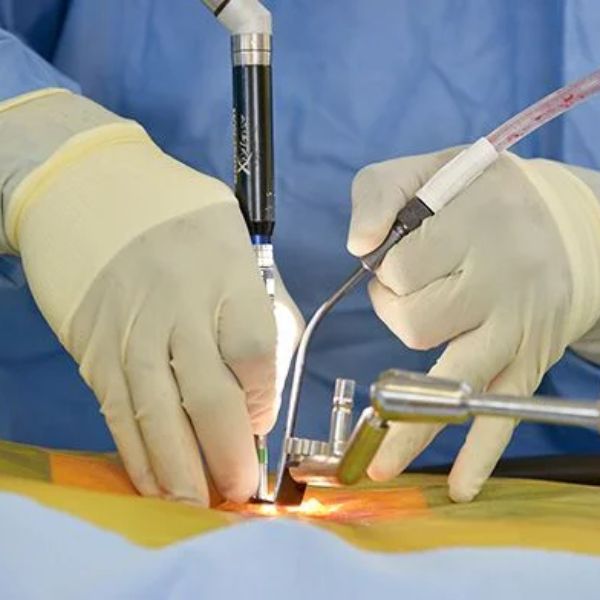
Minimally Invasive Surgery
- Surgery is held strictly as a last resort, recommended only if conservative therapies fail after 6-8 weeks or if progressive neurological deficits develop.
Recovery & Rehabilitation Timeline
Interventional day-care procedures take less than 20 minutes, require zero hospital admission, and allow patients to walk out pain-free within 1-2 hours and resume desk activities the next morning.
Frequently Asked Questions
Is a root block injection painful?
No. The procedure is performed under local anesthesia with micro-fine needles under continuous real-time X-ray guidance. Patients typically report only a mild pressure sensation.
How effective are epidural root blocks for slipped disc?
Clinical studies and our clinic outcomes show over 80-85% significant symptom reduction, allowing the herniated disc material to naturally resorb over several months.
Book Consultation
Consult Dr. Nitish Agrawal for Non-Surgical Disc Prolapse Pain Management.