
Tuberculosis Spine (Pott’s Spine) Treatment
Understanding Tuberculosis Spine (Pott’s Spine) Treatment
Spinal Tuberculosis (Pott’s disease) is one of the most common and debilitating extrapulmonary forms of tuberculosis. It typically affects the vertebral bodies and adjacent intervertebral discs, most frequently in the thoracic and lumbar spine. Without prompt and expert treatment by a specialized spine surgeon, bone destruction can cause severe kyphotic deformity ("humpback"), vertebral collapse, paraspinal cold abscesses, and devastating neurological deficits including paraplegia (Pott’s paraplegia).
Common Signs & Symptoms
- Deep, agonizing back pain that is often worse at night and during movements
- Constitutional symptoms: low-grade evening fever, night sweats, loss of appetite, and weight loss
- Progressive stiffness of the back and difficulty bending forward
- Noticeable spinal curvature, angular humpback (kyphotic deformity)
- Weakness, heaviness, or numbness in the legs; progressive difficulty walking
- Bladder or bowel disturbances in advanced spinal cord compression
Primary Causes & Risk Factors
- Hematogenous spread of Mycobacterium tuberculosis from a primary pulmonary or lymph node focus
- Compromised immunity, malnutrition, or immunosuppressive therapy
- Delayed diagnosis of initial chronic back ache
Diagnostic Evaluation by Dr. Nitish Agrawal
Conservative Options
- Full Course Antitubercular Therapy (ATT) following standard WHO/national DOTS protocols under strict monitoring
- Rigid customized spinal bracing (Taylor’s or Thoraco-Lumbo-Sacral Orthosis - TLSO) for immobilizing the healing spine
- Nutritional support and monitored physical rehabilitation
Minimally Invasive Surgery
- Surgical decompression and cold abscess drainage through anterior or posterior approaches
- Excision of dead sequestered bone and neural decompression under microscope
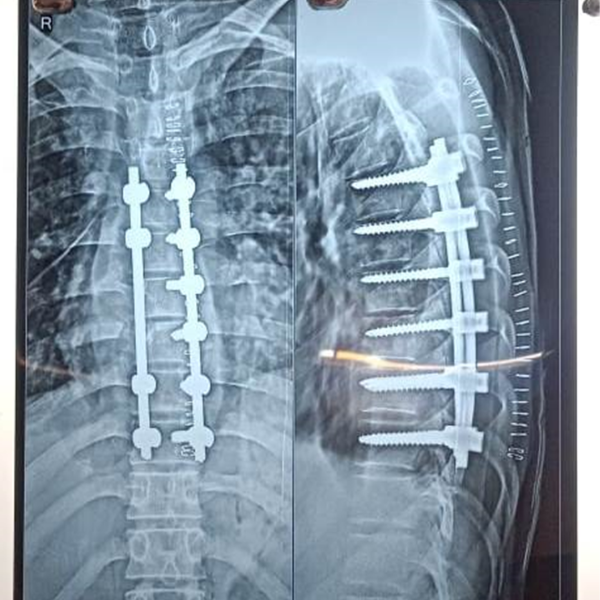
- Titanium mesh cage reconstruction and pedicle screw instrumentation to correct/prevent progressive kyphotic deformity
Recovery & Rehabilitation Timeline
With early ATT therapy and timely surgical stabilization when indicated, the cure rate exceeds 95%. Neurological recovery is dramatic when decompression is performed before irreversible cord changes develop.
Frequently Asked Questions
Is surgery always required for Pott’s spine?
No. More than 80% of patients diagnosed early can be successfully treated with medical ATT drugs and bracing alone. Surgery is reserved for patients with progressive neurological deficits, spinal instability, large abscesses, or severe kyphotic deformity.
How long does TB spine treatment last?
Antitubercular medical treatment typically lasts between 9 to 18 months, depending on clinical and radiological resolution monitored by Dr. Nitish Agrawal.
Book Consultation
Consult Dr. Nitish Agrawal for Tuberculosis Spine (Pott’s Spine) Treatment.