
Cervical Myelopathy (Spinal Cord Compression)
Understanding Cervical Myelopathy (Spinal Cord Compression)
Cervical Spondylotic Myelopathy (CSM) is the most common cause of spinal cord dysfunction in adults over 50. It occurs when age-related degeneration narrows the cervical spinal canal, physically compressing the spinal cord itself. Unlike radiculopathy which causes arm pain, myelopathy causes silent, insidious loss of hand coordination, clumsiness, and unsteady walking.
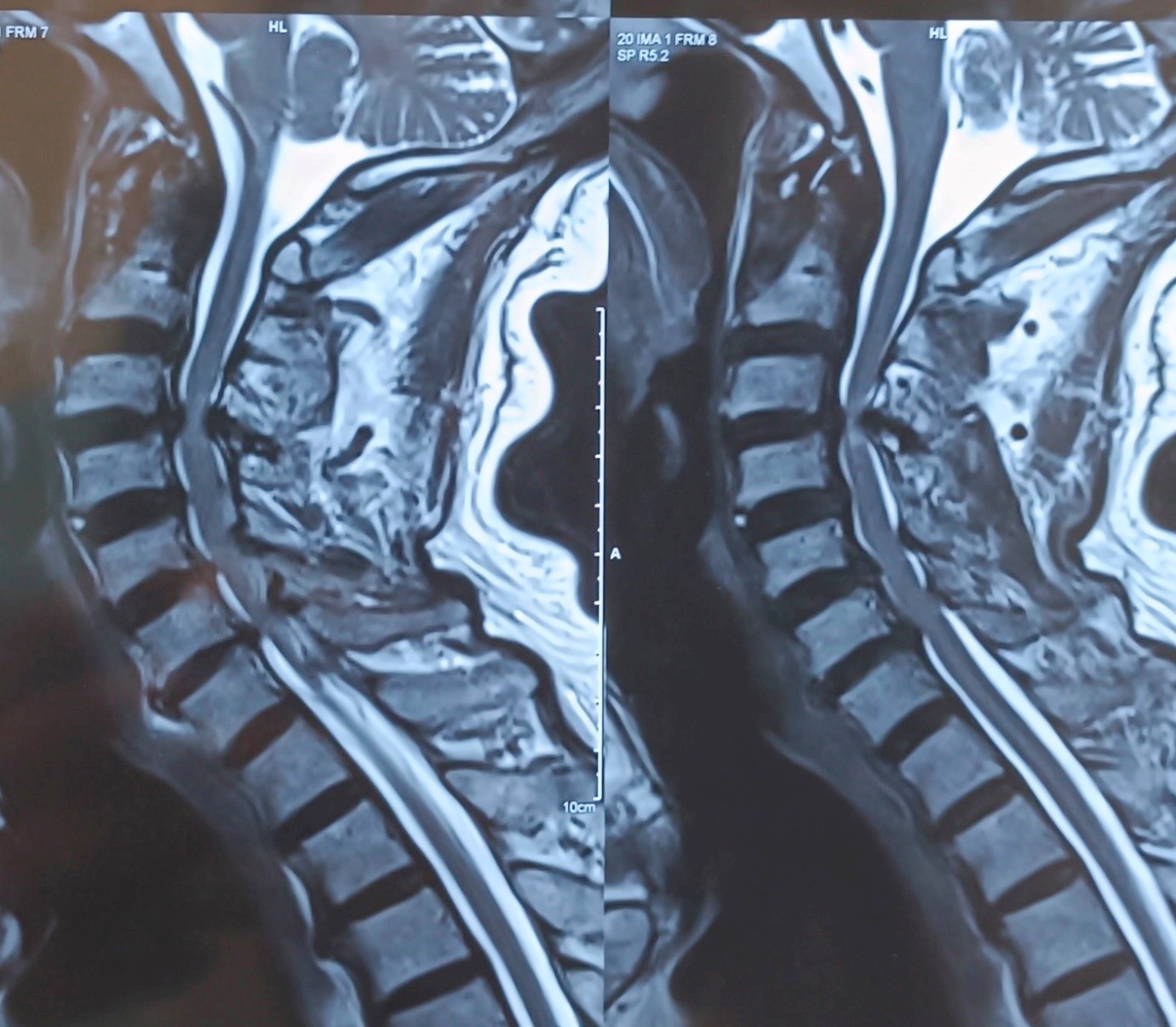
Common Signs & Symptoms
- Loss of fine motor skills: Difficulty buttoning shirts, tying shoelaces, or holding a pen
- Unsteady, clumsy gait: Feeling as though you are "walking on sponges" or losing balance in the dark
- Stiffness and heaviness in both legs (spasticity)
- Numbness or electric shock sensation running down the spine when bending the neck (Lhermitte’s sign)
- Hyperreflexia, positive Hoffman’s sign, and Babinski reflex
Primary Causes & Risk Factors
- Severe multi-level cervical disc herniations and osteophytic ridges
- Ossification of the Posterior Longitudinal Ligament (OPLL)
- Congenital narrow cervical spinal canal
Diagnostic Evaluation by Dr. Nitish Agrawal
Conservative Options
- Cervical myelopathy does NOT improve with physiotherapy or medications once cord compression is established. Close monitoring is indicated only for very mild, non-progressive cases.
Minimally Invasive Surgery
- Anterior Cervical Corpectomy and Fusion (ACCF) for retro-vertebral compression
- Multi-level Anterior Cervical Discectomy & Fusion (ACDF)
- Posterior Cervical Laminoplasty: Expands the spinal canal while preserving cervical mobility
- Posterior Cervical Laminectomy and Instrumented Fusion
Recovery & Rehabilitation Timeline
The primary goal of surgery is to HALT progressive neurological deterioration. Most patients experience substantial improvements in walking stability and manual dexterity during 6-12 months of post-op neuro-rehabilitation.
Frequently Asked Questions
Can cervical myelopathy cause paralysis if left untreated?
Yes. As spinal cord compression worsens, it can cause irreversible spastic quadriparesis (weakness in all four limbs) and loss of bladder control. Timely surgical decompression is vital.
Book Consultation
Consult Dr. Nitish Agrawal for Cervical Myelopathy (Spinal Cord Compression).